
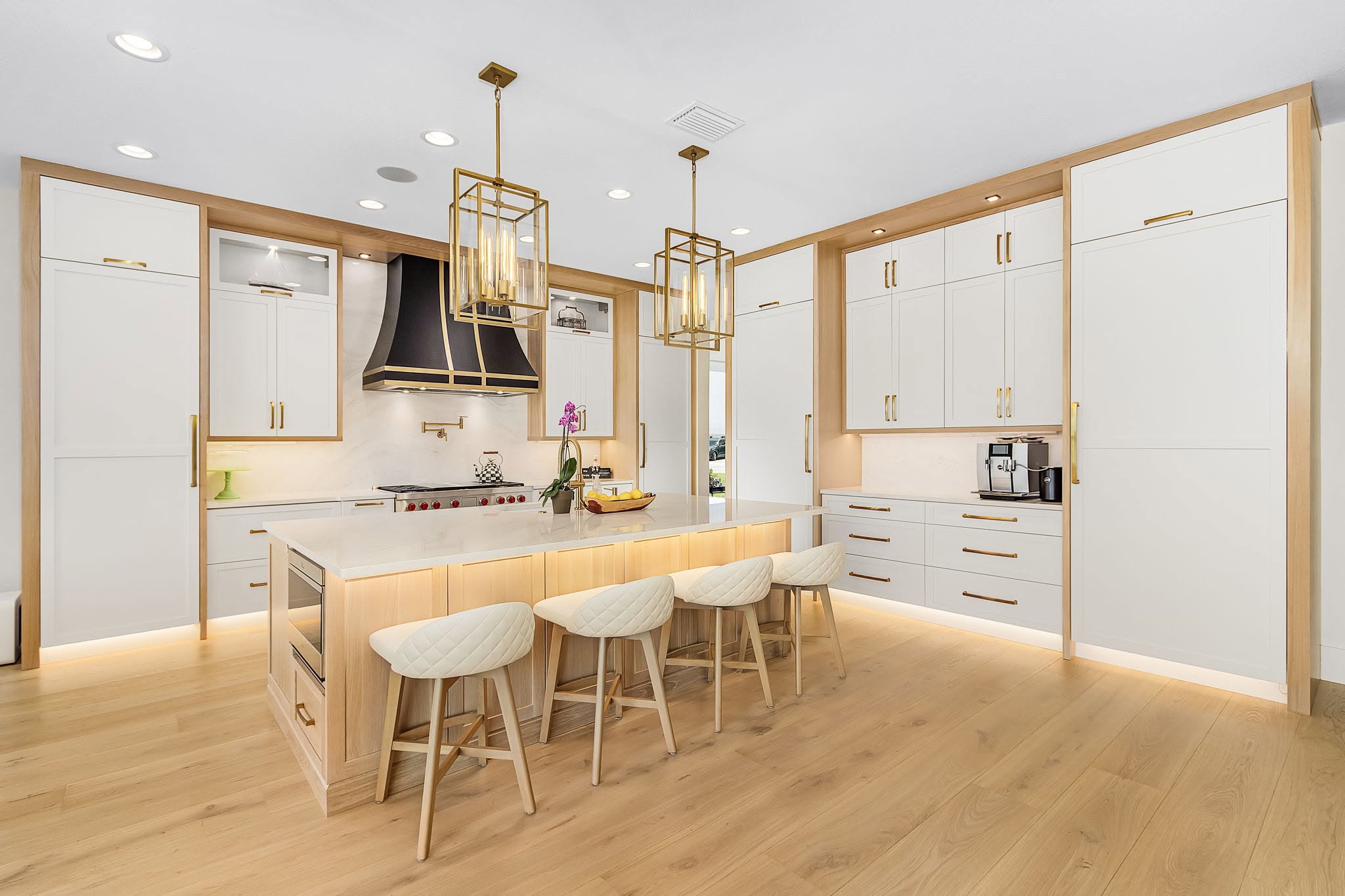
Kitchen remodeling
How to Build a Realistic Kitchen Remodel Budget in Southwest Florida
Kitchen budgets make more sense when they are built from the decisions that actually drive labor, materials and trade coordination—not from a generic price-per-square-foot shortcut.
Published 2026-08-22 · Reviewed by Proskillz Remodeling
There is no single honest number for “what a kitchen remodel costs” without first defining the work. Two kitchens with similar square footage can have very different budgets if one keeps the existing layout while the other moves plumbing, changes walls, upgrades electrical, replaces flooring across connected rooms and uses a more complex finish package.
Separate the budget into scope groups
A useful kitchen budget starts with categories that match how the work is actually built. Typical groups include demolition and protection, framing or layout changes, cabinets, countertops, plumbing, electrical and lighting, appliances, flooring, backsplash or wall finishes, drywall, paint and trim.
This makes it easier to see where money is being spent and where a design decision changes multiple trades at once.
Layout changes have a multiplier effect
Keeping a sink, range and major walls in roughly the same locations can simplify a renovation. Moving them can still be the right choice, but the decision may affect plumbing, electrical, ventilation, flooring, drywall and cabinetry simultaneously. Evaluate layout changes for the functional improvement they create, not just the visible change on a floor plan.
Cabinetry is only one part of the kitchen
Homeowners often begin budgeting with cabinets and countertops because those are easy to see. The finished kitchen also depends on the work that connects them: outlets and lighting, plumbing connections, appliance requirements, wall preparation, flooring transitions, backsplash details, paint and finish carpentry.
That is why Proskillz treats the kitchen as a complete remodeling scope rather than a cabinetry installation. See the full set of coordinated work on our kitchen remodeling page.
Allow for existing-condition risk
Renovation is different from new construction because some conditions remain hidden until demolition. Water damage, previous unpermitted alterations, inadequate framing, plumbing conflicts, damaged substrates or electrical issues can change the work required. A responsible budget should include a contingency appropriate to the age, condition and invasiveness of the project.
Decide where higher-cost choices create real value
Not every element needs to be the most expensive option. Spend intentionally on the features that improve daily function, durability or the architectural result. For one homeowner that may be better storage and drawer hardware; for another it may be lighting, a more functional island, durable flooring or a better cooking layout.
Budget questions to answer before signing a scope
- Does the budget include demolition and disposal?
- Are plumbing and electrical changes included or allowances?
- Are appliances owner-supplied or contractor-supplied?
- Does flooring stop at the kitchen or continue into adjacent rooms?
- Who is responsible for backsplash, paint, baseboard and trim?
- What selections are fixed and what remains an allowance?
- How are hidden conditions and owner-requested changes handled?
The most useful budget is not the lowest early number. It is the clearest description of what the number actually buys. If you are planning a kitchen in Cape Coral or elsewhere in our Southwest Florida service area, send us the scope, timeline and budget range and we can start with a more useful conversation.